On Detachment
What a robotic arm grinding itself apart at midnight taught me about detachment, flow, and getting out of my own way.
Detachment is a quiet word, yet it forms the backbone of almost every great tradition humans have built for how to live.
Look across centuries and continents and the same idea keeps surfacing. In Buddhism, desperate desire is the root of suffering—let go of the ego, and you find peace. In the Bhagavad Gita, the instruction is to release your attachment to the fruits of your labor and simply do the work. And the Stoics, oceans and centuries away, built an entire worldview on the same foundation: let go of what sits outside your control, and master what remains within it.
When ideas that never met keep landing on the same point, that stops being a coincidence. It starts to look like a signal worth following.
But here's where it's easy to get it wrong. Detachment gets read as apathy—as if the goal were to stop caring, to go numb, to surrender your edge. It's the opposite. In the Gita, Krishna doesn't tell Arjuna to drop his weapons and walk away from the battle; he tells him to fight with everything he has, and to let go only of his grip on the outcome. Detachment isn't the absence of ambition. It's what lets you pour yourself fully into the work. Releasing your grip on the outcome is precisely what allows you to care completely about the execution.
There's a hard biological logic underneath this. Your brain already runs on roughly 20% of your body's energy—an enormous toll for its size. Tying your whole sense of self to an outcome doesn't make it burn more fuel; it does something worse. Fear hijacks the system. It floods you with stress, narrows your focus to a pinhole, and drains the exact mental bandwidth you need to think clearly. You end up paralyzed, running hot, and stripped of the very resources the moment demands.
We do not fail because we lack desire. We often fail because our desire consumes the energy we need to succeed.
Let go of that white-knuckled grip and the friction disappears. Resistant energy turns into creative energy. The people who do great work are rarely chasing the finish line with clenched fists—they're the ones who fall, almost stubbornly, in love with the process itself.
I see this in my own life constantly. When I step onto a football pitch just to play, I move freely, I score more, and the whole game feels effortless. That's flow. There are exceptions—a high-stakes match where the pressure itself sharpens you into something fierce. "Diamonds are made under pressure" is real. But that kind of fuel burns hot and runs out fast. If you're playing the long game, bet on flow.
So how do you actually practice this, without it collapsing into hollow self-help?
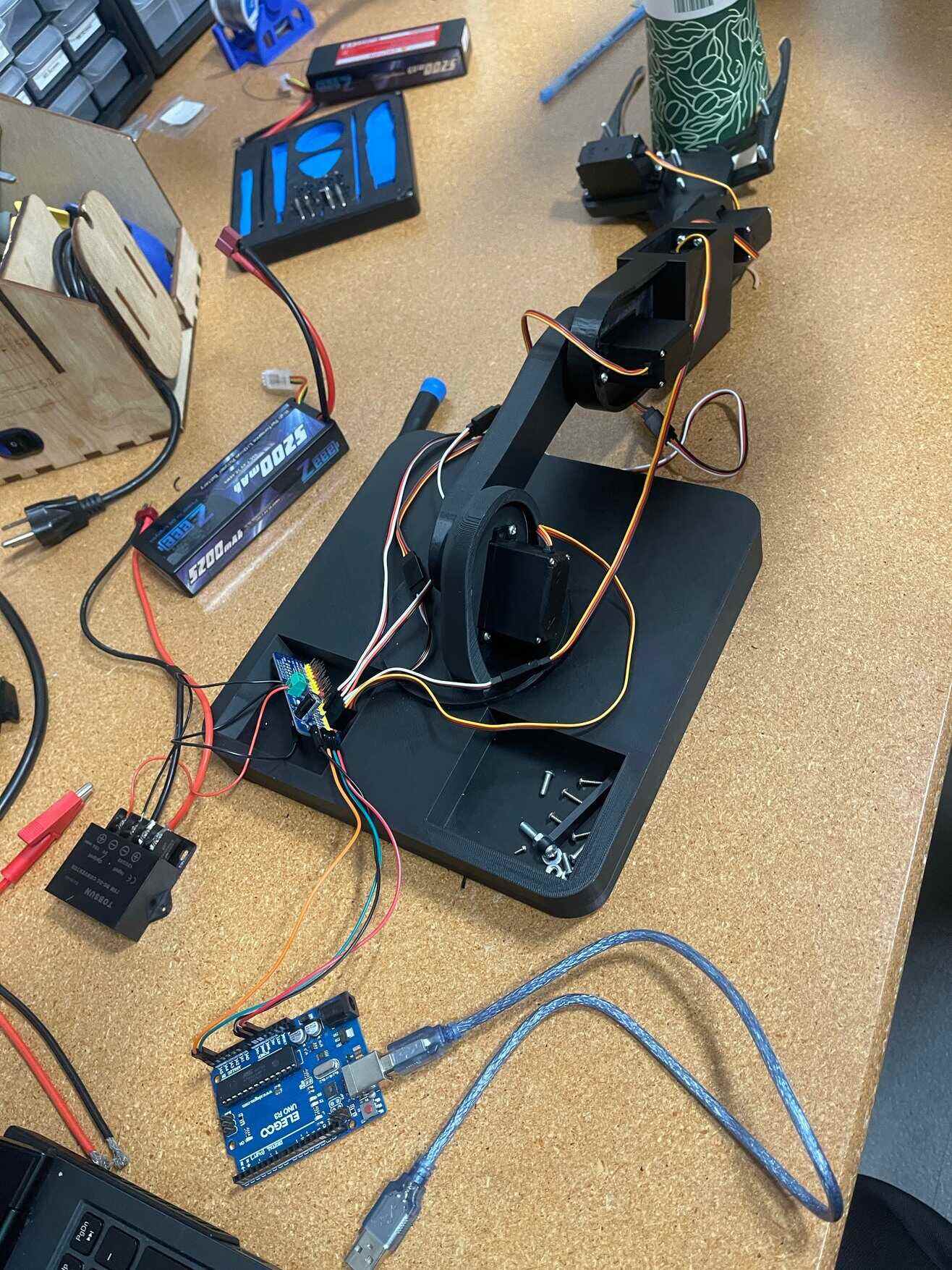
For me it came down to treating my own mind the way I treat the machines I build. A few weeks ago I was in the studio past midnight, programming a robotic arm, and the two servos in its shoulder kept fighting each other—grinding, stalling, overheating under load. I was so locked onto getting the thing to work that I kept brute-forcing the same block of code, gripping the problem tighter, while the hardware quietly tore itself apart in front of me.
I solved it the moment I stopped trying to.
Not because I relaxed into some Zen state, but because my frustration had welded me to one bad assumption. The second I stepped back, the real fix was obvious: each motor just needed its own starting point, its own offset, so they could cooperate instead of compete.
We do the exact same thing to ourselves. We lock onto an outcome—an internship, a flawless project, the shape of our whole future—and when the system resists, we just try to force more current through the wires. Our motors fight each other. We burn ourselves out.
The next time you catch yourself white-knuckling something, pause. Step back and read the error logs. Strip away the ego, and adjust the offsets. The goal was never to stop caring.
The goal is to get out of your own way.
Here’s the robotic arm that inspired this writing: